Dallas, TX · Post-Flood Mold Specialists
Mold Remediation in Dallas, TX — 24/7 Emergency Response
Dallas's extreme heat accelerates mold growth after water damage. HEPA containment, safe removal, EPA antimicrobial treatment, and certified air quality testing before we clear the site.
Call (469) 771-0564 — 24/7 EmergencyWhy Dallas Is High-Risk for Post-Flood Mold
Heat + Moisture = Mold in 48 Hours
Mold is ubiquitous — its spores are present in outdoor and indoor air everywhere, including Dallas homes. Under normal dry conditions, spore concentrations remain low and harmless. But give mold spores moisture, warmth, and an organic material to colonize, and they activate rapidly. In Dallas, those conditions come together with alarming speed after a water damage event.
During Dallas's peak flood season — late spring through early fall — outdoor temperatures regularly exceed 90°F, often reaching 100–105°F. A flooded home in July or August, even with windows open and fans running, maintains interior temperatures that create ideal mold incubation conditions. While IICRC guidelines reference 48–72 hours as a general mold growth window, in Dallas summer conditions, active colonization can begin on wet materials within 24–48 hours of water intrusion.
The winter storm challenge is different but equally serious. After the February 2021 freeze, many Dallas homeowners dealt with burst-pipe flooding during extremely cold temperatures. As the weather warmed in the following weeks, those same homes — many of which received inadequate initial drying — became mold hotspots. The freeze masked the moisture; the spring warmth activated the mold. Months later, homeowners discovered mold behind walls they thought had been properly addressed.
Dallas Flood Pros approaches mold remediation as an integrated part of water damage restoration, not an afterthought. When we assess a water damage loss, we are simultaneously assessing mold risk. Pre-existing mold discovered during a flood job is addressed immediately — we never dry over active mold growth. Our remediation protocol follows EPA and IICRC standards, uses HEPA air filtration and containment to prevent cross-contamination, and concludes with certified clearance testing before we declare the job complete.
Our Protocol
How We Remediate Mold — Safely and Completely
Mold Assessment & Sampling
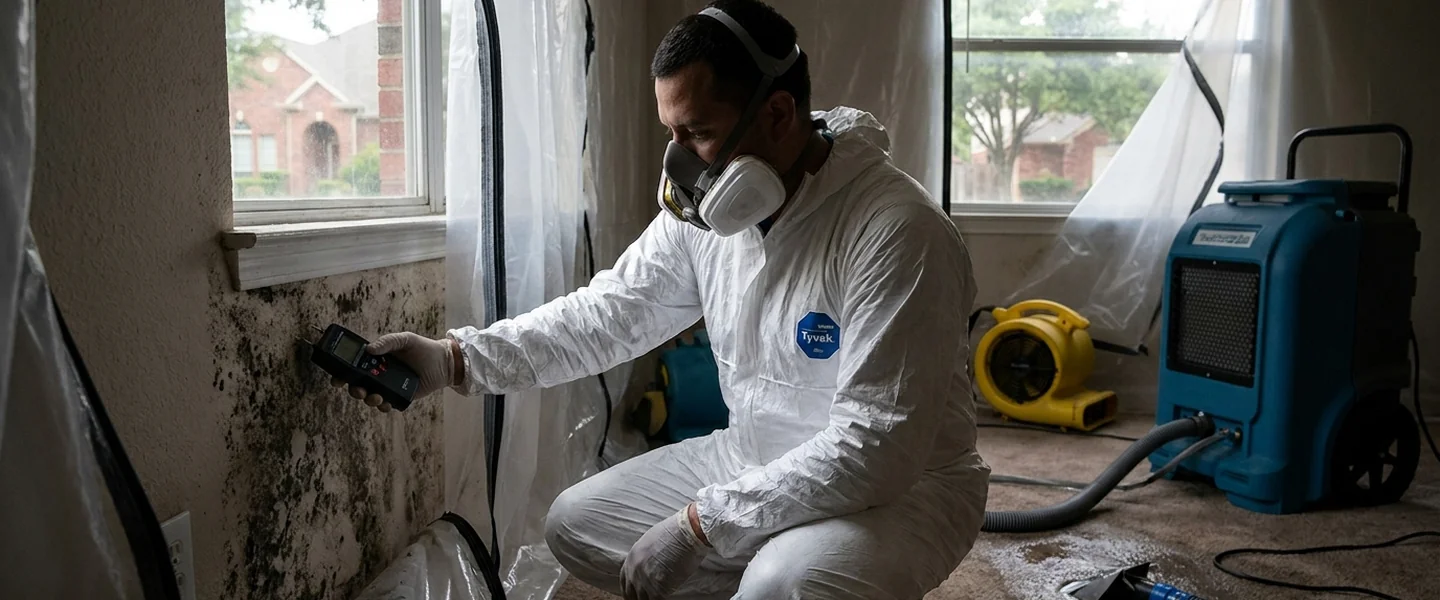
Visual inspection identifies visible mold growth. Moisture mapping identifies suspect areas where mold may be growing behind walls or under flooring without being visible. Air sampling and surface sampling may be performed to establish a baseline and identify mold species present. Assessment findings drive the remediation scope and containment plan.
Containment Setup
Affected areas are isolated using polyethylene sheeting and negative air pressure machines equipped with HEPA filters. Negative air pressure prevents mold spores disturbed during remediation from migrating to unaffected areas of the home. HVAC systems serving the affected area are sealed off to prevent spore spread through ductwork. The containment zone is clearly marked.
Personal Protective Equipment
Remediation technicians working in the containment zone wear appropriate PPE including N95 or greater respiratory protection, disposable coveralls, gloves, and eye protection. For Category 3 contamination scenarios or heavy mold loads, full-face respirators with P100 cartridges are used. No shortcuts on personal protection.
Mold-Bearing Material Removal
Drywall, insulation, wood framing, and other porous materials with mold colonization are removed. The EPA guideline is that porous materials with visible mold growth generally should be removed rather than cleaned — mold embeds into porous materials and cannot be reliably cleaned to acceptable levels. Removed materials are double-bagged and disposed of properly before leaving the containment zone.
HEPA Vacuuming & Surface Cleaning
Hard surfaces, structural framing, concrete, and other non-porous materials are cleaned with HEPA vacuums to capture mold spores, followed by cleaning with appropriate EPA-registered antimicrobial solutions. Wire brushing of wood surfaces may be performed for surface mold on structural framing. All disturbed surfaces are treated.
EPA Antimicrobial Application
EPA-registered antimicrobial agents are applied to all treated surfaces and exposed structural materials. These products kill residual mold spores and provide a treatment layer that inhibits re-colonization during the drying period. Application is documented with product name, EPA registration number, and coverage area for your insurance records.
Structural Drying
After mold removal and antimicrobial treatment, the area must be thoroughly dried before containment can be removed and reconstruction can begin. We set up commercial drying equipment within the containment zone and monitor daily until moisture readings confirm structural dryness. Drying logs are maintained through this phase as well.
Post-Remediation Air Quality Testing
Before removing containment or declaring the job complete, we conduct post-remediation air quality testing. Air samples from inside the remediation area and from an unaffected reference area are analyzed by an accredited laboratory. Results confirming spore counts are at or below reference levels are required before clearance is issued. This testing protects you and provides documented proof that remediation was successful.
What to Watch For
Signs of Mold After a Dallas Water Event
Visible Discoloration
Black, green, grey, or white patches on walls, ceilings, or flooring — especially in areas that were wet. Not all mold is black; don't assume lighter-colored growth is benign.
Musty Odor
A persistent earthy, musty smell — especially in areas that were flooded or that back up to areas that flooded — is a classic mold indicator. This odor comes from mold metabolic byproducts called MVOCs.
Warping or Buckling Materials
Walls, floors, or ceilings that are warping, buckling, or feel soft when pressed may indicate ongoing moisture and mold growth inside material layers not visible on the surface.
Respiratory Symptoms
Unexplained coughing, sneezing, nasal congestion, eye irritation, or skin rashes — particularly symptoms that worsen at home and improve when away — can indicate elevated mold spore concentrations.
Common Questions
Mold Remediation FAQs
How soon after flooding does mold start growing in Dallas?
Under Dallas summer conditions (temperatures 85–105°F, high humidity), mold can begin active colonization of wet materials within 24–48 hours. In cooler winter conditions, the window may extend to 48–72+ hours. This is why rapid extraction and drying is so critical — the faster moisture is removed, the less mold risk there is.
Can I clean mold myself with bleach?
The EPA recommends professional remediation for mold growth covering more than 10 square feet (roughly a 3x3 foot area). Bleach can kill surface mold on non-porous materials but does not address mold embedded in porous materials like drywall or wood — and does not address the moisture source. DIY efforts on flood-related mold frequently leave viable spores behind and fail to address the hidden colonization that drives repeat growth.
Is all black mold "toxic black mold"?
No. "Toxic black mold" refers specifically to Stachybotrys chartarum, a particular species associated with serious water damage events. Many molds appear black or dark green without being Stachybotrys. All significant mold growth should be professionally remediated regardless of color — health impacts vary by species and by individual sensitivity, and visible color is not a reliable indicator of species or toxicity.
Do you test for mold type/species?
Air quality testing identifies spore types and concentrations present in the affected area and in a reference comparison area. Specific species identification is possible through laboratory analysis and may be relevant for health-related decisions. We discuss testing options during our initial assessment and document all testing results in the project file.
Can mold grow in the walls without being visible?
Yes — and this is one of the most common post-flood scenarios. Mold can grow extensively on the back face of drywall, on insulation, and on wall cavity framing surfaces without any visible indication on the painted wall surface. Elevated musty odors, unexplained respiratory symptoms, and walls that feel soft or show subtle staining are indicators. Thermal imaging and moisture meters can identify suspect cavities that warrant opening for investigation.
How long does mold remediation take?
A typical residential mold remediation project takes 3–7 days from initial containment to post-remediation clearance testing. Large or complex projects — whole-home events, commercial buildings, or cases with extensive structural involvement — may take 1–3 weeks. The timeline includes setup, material removal, cleaning, antimicrobial treatment, drying, and the time required for laboratory analysis of post-remediation air samples.
Can my family stay in the house during mold remediation?
Generally, we recommend that the household relocate during active remediation, especially for individuals with respiratory conditions, compromised immune systems, or known mold sensitivities. Containment is designed to prevent spore spread, but active mold disturbance generates elevated spore concentrations within the containment zone and areas near it. We'll give you specific guidance based on the scope of your job and the people in your household.
Does homeowners insurance cover mold remediation?
Mold remediation is often covered when it results directly from a covered water damage event (burst pipe, appliance failure, etc.). Coverage for pre-existing mold or mold resulting from long-term maintenance issues (slow leaks, ongoing dampness) is typically excluded. We provide complete documentation of mold findings, remediation scope, and clearance testing — the same documentation your adjuster will need to evaluate the claim. We recommend contacting your insurer early and involving us in the adjuster communication.
Suspect Mold After a Dallas Flood? Act Now.
In Dallas's heat, mold grows fast. Don't wait weeks for symptoms to appear — call Dallas Flood Pros and get a professional mold assessment within the hour.
Call (469) 771-0564 — 24/7 Emergency